May 29 – Jun 5

The Weekly Digest

A handful of pieces pulled from across the index — one from each publication, ranked for substance over noise.

01
More Than Just Parks·Jun 5·conservation

We Are All Ripples of Hope in the Battle for Our Public Lands

A lyrical essay on the Virgin River and Zion National Park that uses the creek's deceptive power as a metaphor for the subtle but profound force shaping the battle over public lands stewardship.

Stand in the Virgin River in late summer and you’ll wonder what all the fuss was about. At low flow it barely reaches your ankles. It moves slow and shallow over the stones, warm at the edges, so unhurried you could fall asleep to the sound of it. It doesn’t look like a force. It looks like a creek that lost its ambition, going nowhere in a hurry. Standing in it, you’d be forgiven for thinking it couldn’t move the gravel under your own feet. Then look up. Look up at Zion. Two thousand feet of sheer sandstone rising on both sides of you, a cathedral the color of fire that no human hand ever tou

02
Benthall Adventures — A Slow Travel Journal·May 31·travel

The Life Next Door

A reflective piece on the quiet emptiness of a Balinese villa when neighbors leave for a family cremation ceremony, capturing the sensory and emotional weight of absence in shared domestic space.

The week Kadek’s family traveled north for a cremation ceremony, the compound next door went quiet. No children racing through the courtyard. No scooters returning home after dark. No grandparents calling instructions from somewhere deeper inside the family property. No karaoke drifting over the wall at night. Even Jojo stopped barking. For the first couple of days, I couldn’t figure out why the villa suddenly felt so different. Then one evening beside the pool, while the sky dimmed into that heavy blue Bali seems to specialize in, the silence started feeling strangely wrong. The villa felt st

03
Climbing Zine·May 31·climb

Echoes of Expansion: Taking Our Gear for a Walk in the North Cascades by Katie Griffith

A lyrical essay by Katie Griffith on a gear-testing climbing expedition in the North Cascades that grapples with loss, mortality, and spiritual searching amid a stunning alpine landscape. The piece weaves grief and introspection into outdoor narrative.

Yeah, we are star matter from the big bang And that love ain’t far behind you Love ain’t far behind —Ani DiFranco, “Star Matter” We looked for god in the wet heather, the crumbling talus, the heinous gully, and the father-son fishing trip. How can the same god that crafts this landscape let the good ones die early on a ski tour that wasn’t worth it? We are given the edges… Source

04
California Curated·Jun 4·conservation

The Moon May Help Drive California’s Next Flooding Crisis

An accessible exploration of the lunar nodal cycle and how the moon's 19-year gravitational rhythm may amplify California's coastal flooding crises in the coming decade.

The moon. (Photo: NASA) For thousands of years, the moon has quietly tugged at California’s coastline. Its gravitational pull raises and lowers the Pacific twice a day, creating the tides that surfers and beachgoers know so well. In this way, the rhythms of the moon are also the rhythms of the earth. But tucked within those familiar rhythms is a much longer cycle, one that takes nearly 19 years to complete. Scientists call it the lunar nodal cycle . Most Californians have never heard of it. Yet it may help shape some of the state’s biggest environmental challenges of the coming decade: coastal

05
Gripped·Jun 5·climb

Nepali Guide Survives Six Days Alone on Everest

A Nepali Everest guide was rescued alive after six days alone at high altitude, discovered by a cleanup crew near the Khumbu Icefall after being feared dead.

Nepali guide Dawa Sherpa, 52, has been found alive on Everest after surviving nearly a week alone following his disappearance. He was last seen on May 29 between camps three and four at around 7,500 metres. When he failed to return, many in the climbing community feared the worst, with some even posting tributes on social media. Amazingly, Dawa was found alive on June 4 near the Khumbu Icefall by a cleanup team from the Sagarmatha Pollution Control Committee (SPCC). The area had already been largely dismantled for the season, with fixed ladders and infrastructure removed. Rescuers reported fin

06
Bikepacking.com·Jun 3·bike

Modern Machines: Do Bikes Still Make Us Free?

An essay exploring whether modern bikes preserve the sense of agency and freedom that home mechanics once found through tinkering, as contemporary designs shift control away from riders.

After years of trial and error, becoming a competent home mechanic has added another dimension and a greater sense of freedom to Nic’s cycling experience. But following some recent incidents with contemporary bikes, he began to wonder whether the crucial sense of agency he’d found through tinkering was fading in the face of modern designs. In this piece, he tries to answer one simple question: Do bikes still make us free? Find out below… The post Modern Machines: Do Bikes Still Make Us Free? appeared first on BIKEPACKING.com .

07
Soundwalk·Jun 5·hike

Cascade Pass Rain

A personal essay about hiking in the North Cascades with the author's son, exploring why this breathtaking national park remains so undervisited. Clear narrative voice and an intriguing premise, though the snippet is incomplete.

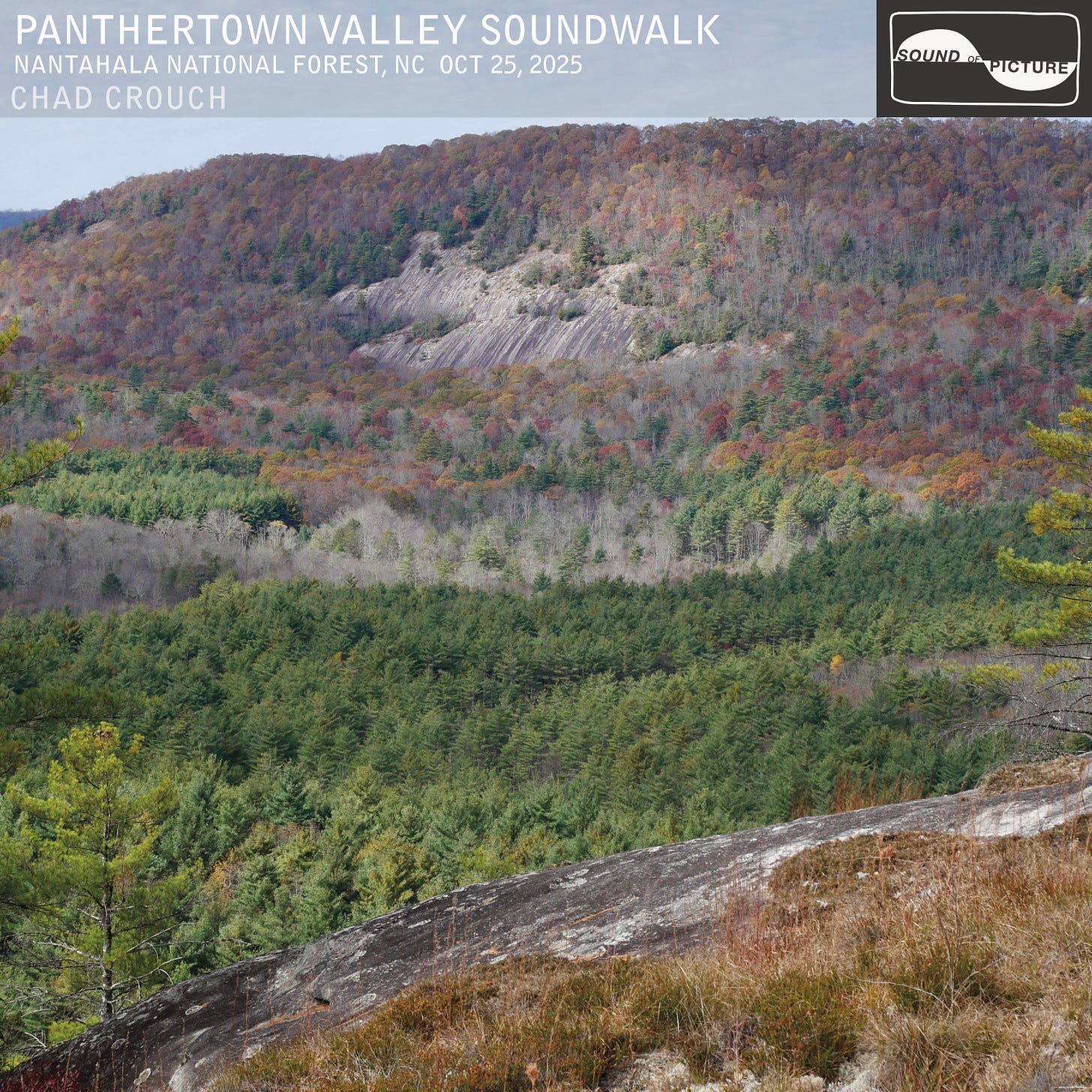
It was supposed to be the highlight of our trip. I spent a few days with my son hiking in the North Cascades last summer. The North Cascades is, according to one YouTuber, who titled his video The Most Breathtaking Hike of my Life! , the “American Alps”. It’s also one of the least visited National Parks in the US lower 48. It ranks as the second-least, to be precise, after Isle Royale National Park in Michigan, a large island in Lake Superior which requires over 12 hours travel time from the closest major airport. All of this to say, it’s a mystery to me why so few people visit the North Casca

08
Our Public Lands & Waters·Jun 5·conservation

Federal Agencies Shrink "Secure Habitat" for Grizzly Bears From 2,500 Acres to 1 Acre for Logging Project in Montana

Federal agencies drastically reduced designated grizzly bear habitat from 2,500 acres to 1 acre to facilitate a logging project in Montana's Helena-Lewis and Clark National Forest, prompting sharp criticism from conservation advocates about regulatory manipulation and wildlife protection.

“Changing the parameters of what qualifies on paper as habitat doesn’t make more habitat. It just makes it easier to approve more logging and more roads while ignoring the real consequences for grizzly bears. The law doesn’t allow it, and we will apparently have to be the people who say ‘no.’” - Sara Johnson Ph.D., Wildlife Biologist for the Forest Service for 14 years. In order for a logging and road-construction project to move forward in Montana’s Helena-Lewis and Clark National Forest, the U.S. Forest Service (USFS) and U.S. Fish and Wildlife Service (USFWS) have taken the drastic step of

09
Looking Sideways·Jun 4·general

"The Southbank Centre Was the Enemy" - Wig Worland On Why He Isn't Supporting The Southbank Centre's Skate 50 Exhibition.

Wig Worland critiques the Southbank Centre's upcoming Skate 50 exhibition, questioning who gets to tell the stories that define action sports history and reflecting on how these pursuits have shifted from genuine subcultures to mainstream commodities.

Mike Manzoori, upstairs at Southbank. Photo: Wig Worland (Intro by Matt) Who gets to tell the stories that shape our history? Looking back, this question has been the defining one of my weird little career in action sports journalism. It goes back to the era in which I grew up, the 80s and 90s, when these pursuits were genuine subcultures, and participating in them and caring about them was a way of defining your life and your own values. Thanks for reading Looking Sideways! Subscribe for free below That state of play never remains constant, of course: age, the passage of time, and the ongoing

10
Flylab·Jun 4·fish

For Six Days and Five Nights

Craig Horlacher, a Colorado fly fisher, endured a traumatic and life-threatening incident on the Middle Fork of the Little Snake River. The author reflects on the emotional weight of reporting stories involving trauma and loss.

Craig Horlacher’s leg after a fishing fall on the Middle Fork of the Little Snake River, CO. Photo: courtesy of Craig Horlacher.. In 2010, I was still writing travel pieces and visiting fishing destinations, and as much as I liked to fish and travel, I was drawn to other, more compelling stories–one was the case of Craig Horlacher, a fellow Colorado resident, who endured a painful and life-threatening experience while fly fishing. One thing about writing articles that involve trauma, pain and loss that I didn’t think about early in my career is the emotional strain it puts on the people I’m in

11
Western Watersheds Project·Jun 4·conservation

The Second Coming of the Dust Bowl

A conservation-focused examination of how the arid High Plains are being overexploited through grazing and agricultural practices, drawing historical parallels to the Dust Bowl era and arguing that the region's climate fundamentally constrains sustainable use. Well-researched and clearly argued with historical grounding.

A grazing allotment on public lands in Catron County, New Mexico. WWP During the 1830s, U.S. Army Officer and explorer Zebulon Pike characterized the lands west of the 100 th meridian (which runs roughly through the center of Nebraska) as, “The Great American Desert.” His report was shouted down by westward-expansionist boosters who proclaimed that rain would follow the plow. But Pike was right: On the basis of average annual rainfall, the High Plains, the Great Basin, and the Sonoran and Mojave regions are absolutely deserts, climatically arid, technological interventions notwithstanding. Und

12
Peak Enjoyment·Jun 3·ski

Ski dad

A personal essay about how skiing with his sons has replaced powder chasing as the author's favorite mountain activity, and what the teaching process has revealed about parenting and presence.

Lately, skiing with my sons is my favorite thing to do in the mountains. It used to be riding powder, but that’s been in short supply due to warming winters and my inflexible schedule. Going through the whole process of teaching them to ski has taught me a lot about being a dad. I’m a better parent when I’m outside. I’m my most patient, present self. Skiing brings me to that headspace and helps me see the bigger picture: you can’t teach someone to ski any more than you can teach them to be themselves. Thanks for reading Peak Enjoyment! Subscribe for free to receive new posts and support my wor

13
Long Run Labs·Jun 3·run

What I Learned When Claude Read 12 Years of My Bloodwork... and What's Next

A runner with a decade of bloodwork data discovers an unexpected seasonal pattern in ferritin levels after using AI to analyze her records, raising questions about what patterns we miss even with access to our own data.

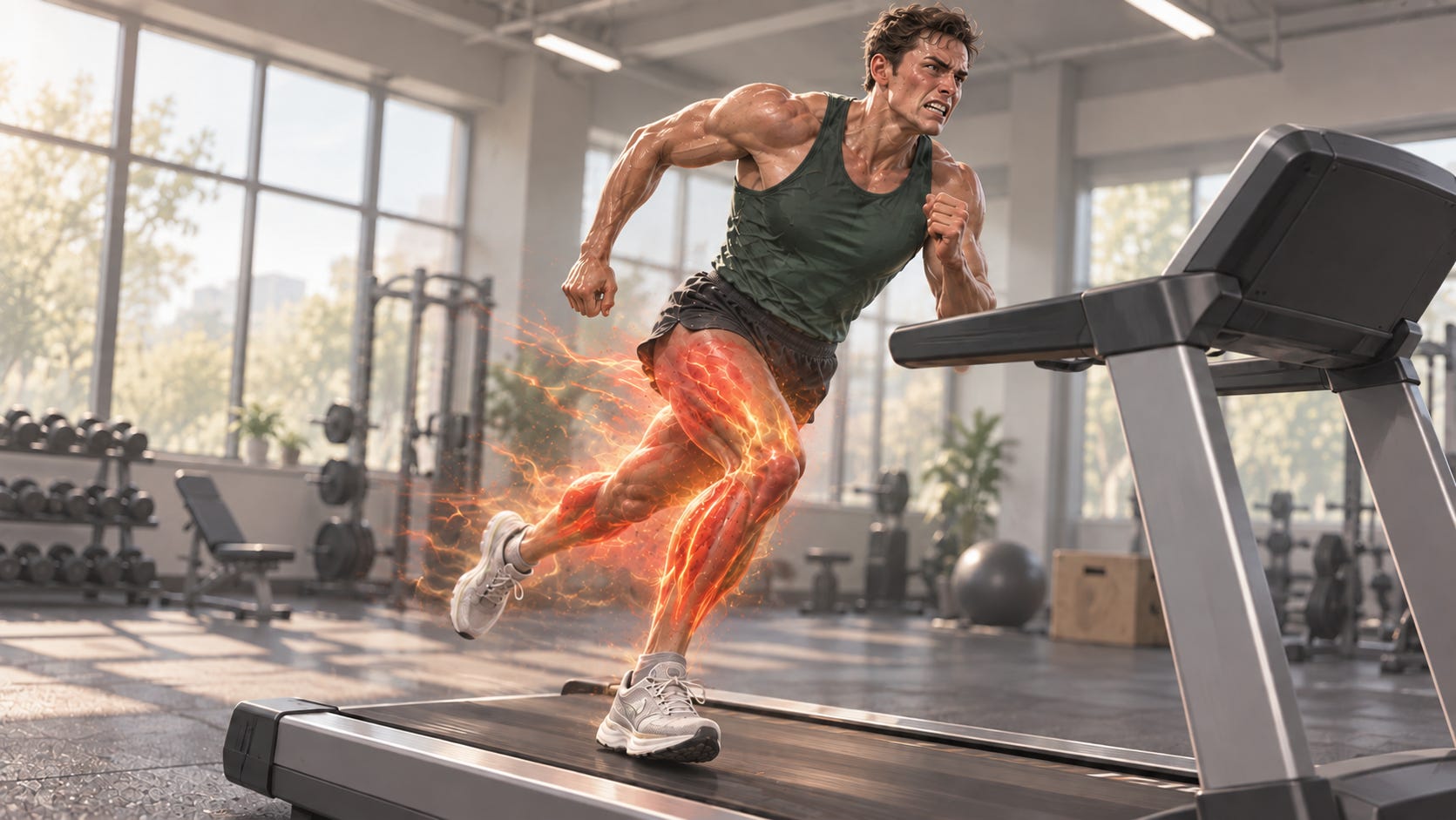
I have a ferritin problem in the summer. I did not know this until two weeks ago. I have been getting bloodwork four to six times a year since 2014. I have lived at altitude since 2021. I’ve been training under the same coach (David Roche) since 2018. I have a marathon PR from Boston and a few ultra finishes in the last couple of years. I spent a decade at InsideTracker, a company whose entire product was helping people interpret their own blood data. And I still did not notice that my ferritin reliably craters every summer. This Substack is reader-supported. To receive new posts and support m

14
Here & There·Jun 3·general

Simple in, simple out.

A reflective essay on the deterioration of respectful discourse in outdoor communities, contrasting a thoughtful email exchange with the current state of divisive, headline-driven social debate.

I've been thinking this week about a reader who emailed me a few months ago to tell me I was wrong. He'd read a piece I wrote, didn't agree with where I'd landed, and laid out his perspective. I had a nice few emails back and forth with him to discuss. Watching the last few weeks of events and discourse across the topics I tend to cover has left me feeling pretty despondent. The kind of disagreement and discussion that email chain represented feels increasingly rare. The specifics don't matter much. You know the patterns: knee-jerk reactions before anyone's read past the headline, rabid fanbas

15
Home & Place Writing·Jun 3·travel

An Urban Square in Huntingdon and a Man I Never Knew

A personal essay about arriving in an unfamiliar English town and learning to know it through exploration—discovering community through footpaths and architecture as a way of finding home after relocating to be near aging family.

I arrived in Huntingdon in 2019 to be closer to my aging father; I had no personal links with the town and needed to familiarise myself with it, and its people, to figure out how I fitted in. I needed to come to know this place intimately before it could feel like home. Footpaths On an April day I set out to explore. A profusion of footpaths emanated from the high street, linking and branching, forming miniature communities. As I walked, I noticed the eclectic mix of architecture, from nineteenth century terraces and converted heritage buildings to between-the-war semi-detached houses and mid-

16
The Bikepacking Journal·Jun 3·bike

Modern Machines: Do Bikes Still Make Us Free?

A reflective essay on how home bike mechanics can foster agency and freedom, examining whether modern bike designs have diminished that sense of personal control and mastery. A thoughtful exploration of cycling culture with a clear philosophical angle.

After years of trial and error, becoming a competent home mechanic has added another dimension and a greater sense of freedom to Nic’s cycling experience. But following some recent incidents with contemporary bikes, he began to wonder whether the crucial sense of agency he’d found through tinkering was fading in the face of modern designs. In this piece, he tries to answer one simple question: Do bikes still make us free? Find out below… The post Modern Machines: Do Bikes Still Make Us Free? appeared first on BIKEPACKING.com .

17
The Trek·Jun 2·hike

These Are the Best Hostels on the Appalachian Trail, According to Thru-Hikers

A data-driven ranking of the best Appalachian Trail hostels based on a 279-person thru-hiker survey, explaining the methodology and competitive nature of the annual list. Well-structured listicle with reporting and clear utility for trail users.

ur annual AT Thru-Hiker Survey had 279 participants in 2025. We gathered data on a variety of categories: different types of gear, resupply strategies, budget on trail, and more. Year after year, one of our most compelling datasets is our ever-competitive hostel ranking. When filling out our survey, hikers are asked to select their top three choices from a list of over 100 hostels along the trail. This is a tall order, but the 2025 class of hikers delivered. ... The post These Are the Best Hostels on the Appalachian Trail, According to Thru-Hikers appeared first on The Trek .

18
Run to Write: Where Movement & Writing Meet·Jun 1·run

Get Up This Hill. Part 9

An excerpt from a longer ultramarathon narrative (Part 9) capturing the runner at mile 60, supported by family and crew as they prepare to push into the night with a fresh shirt, fuel, and a pacer. The piece has vivid sensory detail and emotional immediacy, though as a standalone excerpt it feels incomplete.

I cruised past the aid station and spotted my family and crew. Mile 60, farther than I’d ever gone, and all I could think about was the dry shirt Jeff was already holding out for me. I stripped off my vest and soaking wet shirt, pulled on the fresh shirt, and everyone moved in to restock my fuel and swap my flasks. Bethany pressed a headlamp into my hands. “You might need this heading up the gorge.” I hadn’t even thought about the dark. I was grateful she had, and Brindsley already had his headlamp over his hat. He was ready to pace me. We got a quick photo and took off. I noticed immediately